
Blog

- Home
- TECH ARTICLES
- Professional opinion
- Professional Perspective and Role of Oil Mist Collectors in Industry
Professional Perspective and Role of Oil Mist Collectors in Industry
September 05,2025
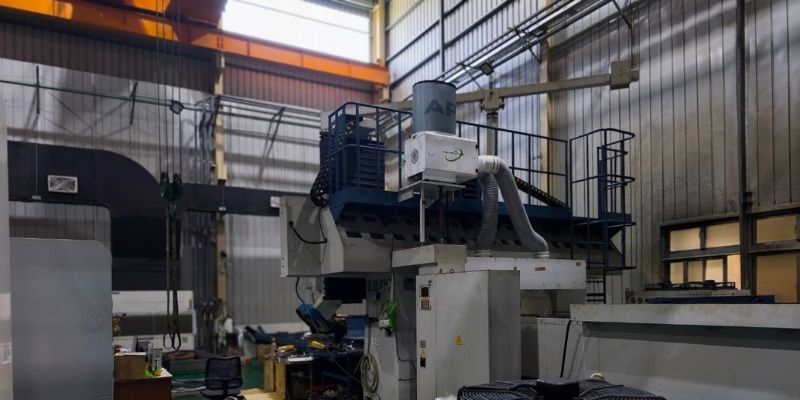
As industrial processes become more diverse and automated, the issue of oil mist generation in the workplace has gained increasing attention. Oil mist not only affects the working environment and machinery performance but also poses health risks to employees and increases cleaning and maintenance costs. Against this backdrop, oil mist collectors (OMCs) have become an indispensable piece of modern industrial equipment. Their role extends beyond simple air purification to encompass environmental protection, energy saving, and production efficiency enhancement.
1. Technical Features and Professional Value of Oil Mist Collectors
The primary function of an oil mist collector is to capture, filter, and recycle oil mist generated during metalworking, machining, or cooling and lubrication processes. Modern high-efficiency oil mist collectors typically feature:
-
High-efficiency Filtration System
Utilizing multi-layer filter media, electrostatic adsorption, or high-performance fiber filters, OMCs can effectively capture micron-sized oil mist particles with filtration efficiencies often exceeding 95%. This ensures a clean workshop environment while reducing oil adhesion and wear on machinery components. -
Energy-saving Design and Automated Control
High-efficiency motors, low-resistance airflow design, and intelligent operating modes allow OMCs to operate continuously while minimizing energy consumption. Advanced models with IoT monitoring can detect filter clogging or changes in oil mist concentration in real time and automatically adjust operations to achieve optimal energy efficiency. -
Oil Mist Recovery and Reuse
Some systems can filter and recycle collected oil, reducing lubricant consumption, lowering production costs, and supporting green manufacturing initiatives.
2. Role in Industrial Production
-
Improving Workplace Environment and Protecting Health
Industrial oil mist contains fine oil droplets and lubricants, which can cause respiratory issues, skin irritation, and other health problems with prolonged exposure. Oil mist collectors effectively reduce airborne oil mist levels, maintaining a safe and healthy working environment and complying with occupational health regulations. -
Enhancing Equipment Efficiency and Product Quality
Accumulated oil mist can affect machinery cooling, lubrication, and machining precision, potentially causing surface contamination and product defects. By maintaining clean air, OMCs reduce equipment wear, decrease maintenance frequency, and improve production stability and yield. -
Energy-saving, Emission Reduction, and Environmental Responsibility
High-efficiency OMCs reduce energy consumption and lubricant waste, decreasing environmental oil mist emissions and helping companies achieve carbon reduction and ESG goals, making them an important tool for industrial green transformation. -
Alignment with Smart Manufacturing Trends
With Industry 4.0 and smart factory development, OMCs with intelligent monitoring, data collection, and remote management functions are no longer just air purification devices—they become integral components of industrial process management, supporting smart production line operations.
3. Professional Perspective and Development Trends
-
Diverse Application Scenarios
From metalworking, machinery manufacturing, and automotive parts to food processing and electronics, OMCs are widely applicable. Different industrial processes can select models based on oil mist concentration and emission levels to achieve targeted control. -
Technological Innovation
Next-generation OMCs are evolving toward high efficiency, low energy consumption, long service life, and intelligence. Innovations include nanofiber filters, multi-layer composite structures, electrostatic capture, and IoT and big data integration for predictive maintenance and energy optimization. -
Environmental and Social Value
As an important tool for corporate social responsibility, OMCs improve working conditions and reduce the environmental burden of production, demonstrating the integration of industrial technology with sustainable development principles.
Conclusion
The role of oil mist collectors in modern industry goes far beyond that of traditional air purification equipment. They are comprehensive solutions for improving production efficiency, safeguarding employee health, reducing energy consumption, and fulfilling environmental responsibilities. With the advancement of smart manufacturing and green industry, oil mist collectors will continue to evolve, becoming a core support for industrial environmental protection and efficient production, providing strong technical assurance for sustainable industrial development.
Article Classification
Recent Articles
- Professional Perspective and Role of Oil Mist Collectors in Industry
- How Smart Manufacturing Improves Air Quality Management
- Energy-saving filtration equipment: a new direction for industrial environmental protection
- Research and development and application cases of high-efficiency filter materials
- Future Challenges of Industrial Air Pollution Control